
By Smart Builder 360 Team | Principal Contributors: Dave Daugherty & Kurt Shank | Updated: September 2026
A home builder usually manages a build under one contract with the homeowner, start to finish. A general contractor more often coordinates multiple subcontractors and trades on behalf of an owner or a larger project — sometimes juggling several jobs with different sub crews running at once. The distinction matters less for software than you'd think: both need estimating, change orders, and scheduling. A GC just leans harder on the subcontractor-coordination side of that same workflow.
That overlap is why most "general contractor software" searches lead to the same handful of platforms a small residential builder would also consider — just marketed with different language. Strip the marketing away and small general contractor software is really the same short list: estimating, change orders, scheduling, and subcontractor coordination.
Strip away the marketing and a small GC running a handful of jobs at once needs four things, reliably:
That's the real list. Everything past it is scale, not necessity. If you're still deciding between platforms at this scale, see our full construction software comparison.
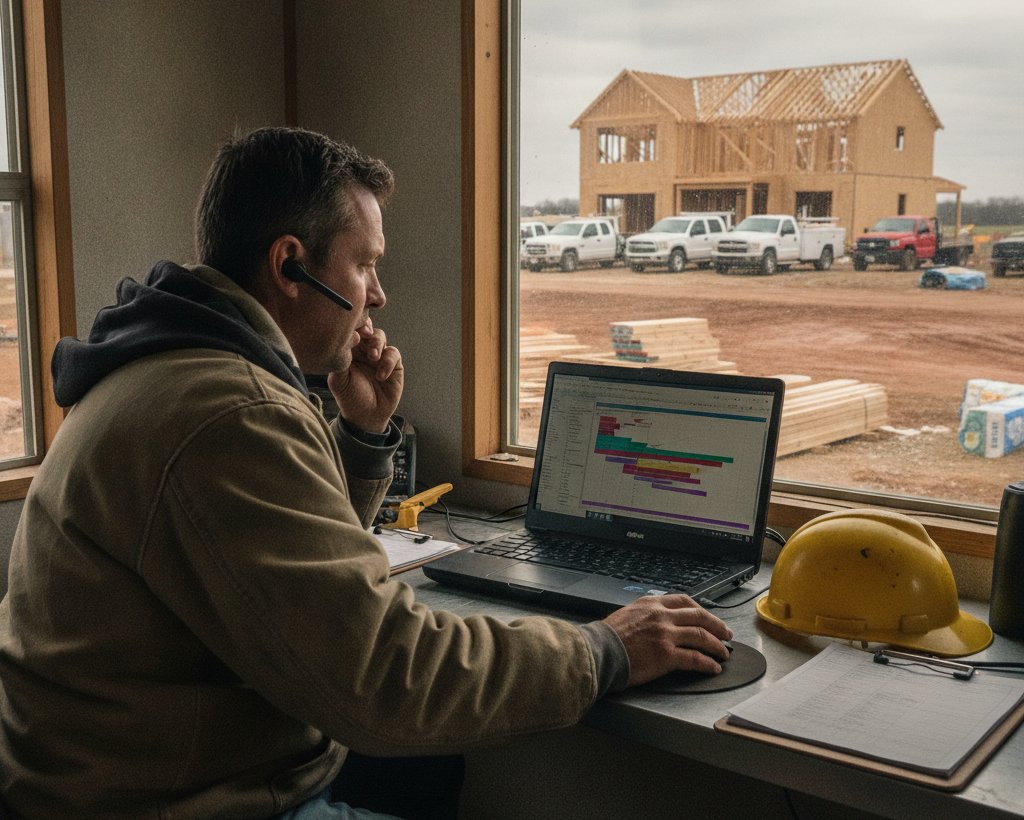
Search "general contractor software" and most of what comes back is built for a very different operation: bid marketplaces connecting you to thousands of subs you'll never use, equipment and fleet tracking for companies running heavy machinery across multiple sites, multi-level approval chains for organizations with a project management office, and accounting suites deep enough to need a dedicated controller.
None of that is wrong to build — it's just built for a GC running dozens of crews across major commercial or institutional projects, not one running a handful of residential or light-commercial jobs with a lean team. See NAHB's construction business management resources for the broader operational side of running a GC business at that scale.
This is the piece that separates a GC's real workflow from a generic project-management tool: keeping every sub's agreement, insurance documentation, and payment status tied to the specific job and phase they're working, not scattered across email threads and paper folders. Get that right and change orders, scheduling conflicts, and payment disputes drop sharply. See our full guide on how to manage construction subcontractors for the complete system.
The core GC workflow, without the enterprise price.
Estimating, change orders, scheduling, and subcontractor coordination — built for a small team, running in a day, not months.
Try Now →30-day free trial. No credit card required.
Estimating, change order tracking, scheduling that shows every trade on one job, and a way to keep subcontractor documentation organized. Most enterprise GC platforms bundle in accounting suites, bid marketplaces, and equipment tracking a small GC running a handful of jobs will never touch.
A home builder usually manages the whole build under one contract with the homeowner. A general contractor more often coordinates multiple subcontractors and trades on behalf of an owner or a larger project, sometimes across several jobs with different sub crews at once. The software needs overlap heavily — estimating, change orders, scheduling — but a GC leans harder on subcontractor coordination specifically.
Usually not. Both are built and priced for larger firms with office staff to run them. A small GC running a handful of jobs with a lean crew typically needs the same core workflow — estimating, change orders, scheduling — without the enterprise price or the months-long rollout.
Keep sub agreements, insurance documentation, and payment status tied to the specific job and phase, not scattered across email and paper. See our full guide on how to manage construction subcontractors for the complete system.
Smart Builder 360 was built for small residential builders, and a small general contractor running a similar volume of jobs — estimating, change orders, scheduling, subcontractor coordination — fits the same workflow. It's not built for large commercial GCs managing dozens of crews across major projects.
"General contractor software" and "small builder software" point at the same core workflow more often than the marketing suggests. Strip away the bid marketplaces, fleet tracking, and enterprise approval chains, and what's left — estimating, change orders, scheduling, subcontractor coordination — is exactly what a small GC actually runs a job on. Look for that, not the longest feature list.

Our team of experts is ready to help around the clock.
