
If you're searching for the bank draw process for home builders, you're building with a construction loan and trying to understand how to request draws, what the bank expects, and why payments get delayed or rejected.
This guide explains exactly how the bank draw process works — step by step — so you get paid at every milestone without delays, rejected requests, or paperwork surprises.
By Smart Builder 360 Team | Principal Contributors: Dave Daugherty & Kurt Shank | Updated: September 2026

Building homes with a construction loan means the bank controls when you get paid.
The bank draw process for home builders is the mechanism that unlocks that money — milestone by milestone — as work is completed and verified. Get it right and cash flows cleanly through the project. Get it wrong and you're waiting on inspectors, chasing lender paperwork, and covering costs out of pocket while you wait for approval.
This guide breaks down exactly how the bank draw process works — from loan setup through final draw — what lenders look for, what causes delays, and how to build a draw management system that gets your requests approved the first time, every time.
A bank draw — also called a construction draw or draw request — is a formal request submitted by the builder or borrower to the lender to release a portion of the construction loan funds based on completed work. See our short, plain-English breakdown of what a draw request actually is if you want the definition on its own.
Construction loans don't work like traditional mortgages. The full loan amount isn't handed over at closing. Instead, the lender holds the funds and releases them in increments — called draws — as work progresses and is verified at each milestone.
Each draw request documents what has been completed, what it cost, and how that completion aligns with the approved draw schedule. The lender — typically a bank or credit union — reviews the request, orders an inspection, and releases funds when the work is confirmed.

Before diving into draw mechanics, it's worth understanding the construction loan structure that the draw process operates within.
A construction loan is a short-term, interest-only loan that covers the cost of building a home. The loan term typically runs 6 to 18 months — long enough to complete construction. During the construction period, the borrower pays interest only on the funds that have been drawn, not on the full loan amount.
At project completion, the construction loan is either paid off (often through a permanent mortgage) or converted to a long-term mortgage in what's called a construction-to-permanent loan — sometimes called a "one-time close" loan. [Consumer Financial Protection Bureau — what is a construction loan]
The lender controls the draw process. They set the draw schedule, define what documentation is required for each draw, order inspections, and approve or deny each request. The builder's job is to document completed work in a format the lender accepts and submit requests that are accurate, complete, and on time.
Here's what makes the draw process so important for builders: you typically pay for work before you get reimbursed. You pay your subs, you pay your suppliers, you pay your crew — and then you submit a draw request and wait for the bank to release funds. Exactly how long that wait runs depends on your lender, but it's real time with your money already spent.
A delayed or rejected draw request extends that cash flow gap. Managing draws efficiently is directly connected to managing your cash flow — and for most residential builders, that's the difference between a comfortable job and a stressful one.
The draw schedule is the roadmap for the entire draw process. It's established at loan closing and defines exactly how many draws will occur, what project completion percentage or milestone triggers each draw, and what percentage of the loan is released at each stage.
Lenders vary on their draw schedules, but the most common residential construction draw structure looks like this:
The draw process starts when work defined in the draw schedule is complete. Don't submit a draw request before the work is done — an inspection will catch it, the draw will be denied, and you've added delay. Complete the work, confirm it's inspection-ready, then initiate the request.
Before submitting any draw request, collect conditional lien waivers from every subcontractor and supplier who performed work or supplied materials for the completed phase. This is non-negotiable for most lenders — a draw request without lien waivers will not be approved.
A conditional lien waiver states that the sub or supplier waives their lien rights upon receipt of payment. It protects the lender (and the homeowner) from mechanic's liens being placed on the property for unpaid work.
Every lender has their own draw request form. Fill it out completely — no blank fields, no estimated numbers where actuals are available. The form typically requires the draw number, the milestone description, the amount requested, the percentage of completion, a cost-to-complete breakdown, and supporting documentation attachments.
Incomplete or inaccurate draw forms are the single most common cause of draw delays. See our full guide on what is a bank draw form for a complete breakdown of every required field.
Every draw request needs supporting documentation. At minimum: progress photos of completed work, signed lien waivers, inspection reports for any inspections that occurred since the last draw, and an updated cost-to-complete. Some lenders also require invoices from subs and suppliers, proof of payment for prior draws, and a builder's certification of completion.
Submit the complete package to your lender's draw department. Know your lender's preferred submission method — some accept email, others require a portal upload, others still use physical mail. Confirm receipt. Don't assume the draw is in process until you've confirmed it was received.
After receiving your draw request, the lender typically orders a third-party construction inspection. An inspector — usually a local appraiser or construction inspector contracted by the lender — visits the site and verifies that the work claimed in the draw request is actually complete.
The inspection typically takes 3 to 7 business days to schedule and complete. The inspector's report goes back to the lender, who uses it to approve or adjust the draw amount.
The lender reviews the inspection report, the draw form, and all supporting documentation. If everything is in order, they approve the draw and authorize fund disbursement. If there are deficiencies — work that isn't complete, missing documentation, lien waiver gaps — they will request corrections before approving.
Once approved, funds are typically disbursed within 1 to 5 business days. Some lenders disburse directly to the builder. Others use a two-party check system where both the builder and the homeowner must endorse the check. Confirm your lender's disbursement method at loan setup — a two-party check system adds time to every draw cycle.
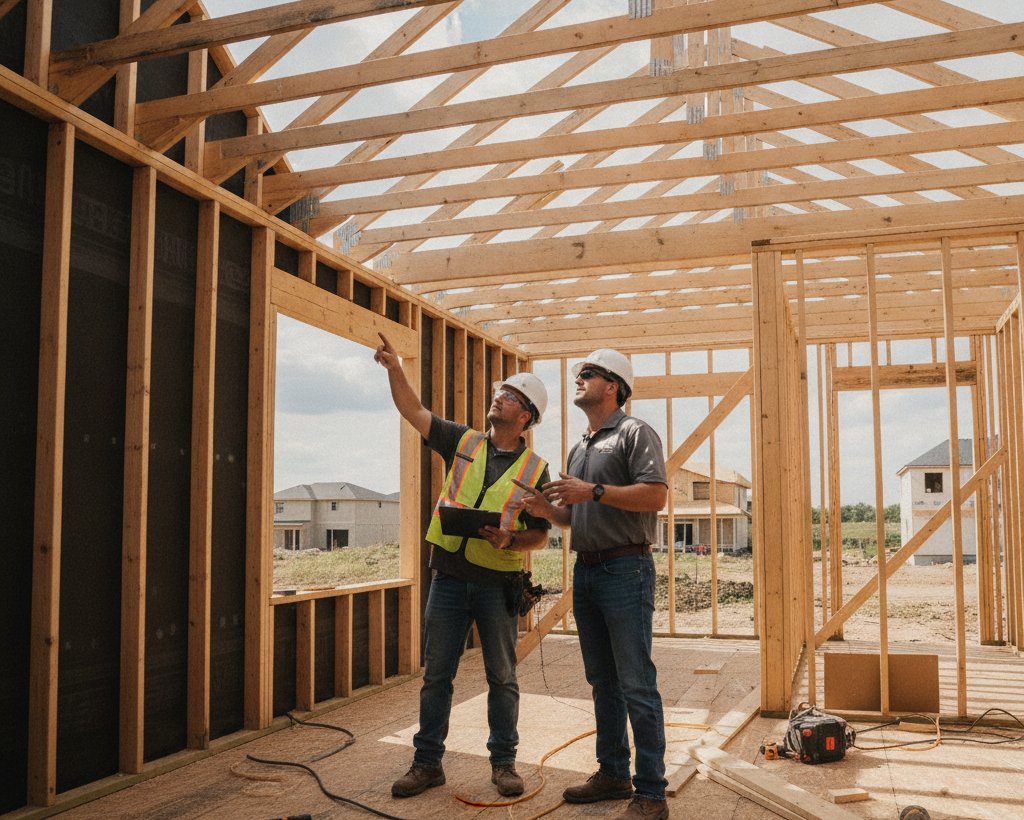
Lenders are protecting their collateral. Every draw request is evaluated against one core question: does the completed work justify the funds being requested?
Specifically, lenders look for:
Draw delays are expensive. Every day between submitting a request and receiving funds is a day you're covering costs out of pocket. Here are the six most common causes — and what to do about each one. A delay is different from an outright denial, though; see our breakdown of why construction draw requests get rejected if the bank has actually turned one down rather than just holding it up.
This is the most common draw delay. A single missing lien waiver from a sub or supplier can hold the entire draw. Build a lien waiver collection process into your job management — collect waivers as you pay subs, not at draw time.
Blank fields, estimated numbers, or missing attachments cause lenders to send the draw back for correction. Every field on the draw form should be completed with accurate, verifiable information before submission.
If you submit a draw request and the inspector finds the claimed work isn't done, the draw is either denied or reduced. Submit draws only when work is genuinely complete and ready for inspection — not when you expect it to be done in the next few days.
In busy construction markets, inspectors may be booked out 5 to 10 business days. You can't control inspector availability, but you can submit draw requests as soon as milestones are reached — not days later. Every day of delay on your end adds to the total cycle time.
If your cost-to-complete shows that the remaining loan funds aren't sufficient to finish the project, a lender may hold or reduce draws until the gap is resolved. Keep your cost tracking current so you can show an accurate cost-to-complete at every draw. See our guide on how to track job costs as a contractor for the full system.
If your lender disburses funds via a two-party check requiring both builder and homeowner signatures, getting that check endorsed adds time — especially if the homeowner is traveling or unresponsive. Discuss disbursement mechanics with your lender before the loan closes and confirm who needs to be available at each draw.
Every lender has their own form, but every bank draw form covers the same core information. Here's what should appear on every draw request you submit:
Smart Builder 360 generates bank-ready draw forms directly from your project data — pulling the cost breakdown, percentage complete, and trade list automatically so you're not re-entering numbers you already have. See the full breakdown in our guide on what is a bank draw form and how do contractors use it.
| Tool | Draw Form Generation | Cost-to-Complete Tracking | Lien Waiver Management | Draw Schedule Tracking | Best For |
|---|---|---|---|---|---|
| Smart Builder 360 | ✅ Auto-generated | ✅ | ✅ | ✅ | Residential builders managing construction loan draws on multiple jobs |
| Excel / Word templates | ⚠️ Manual | ⚠️ Manual | ❌ | ⚠️ Manual | Single jobs — breaks down at volume |
| Lender's own portal | ⚠️ Form only | ❌ | ❌ | ⚠️ Lender-side only | Submission only — no project management integration |
| Buildertrend | ✅ | ✅ | ⚠️ Limited | ✅ | Mid-to-large builders ($499+/mo) |
| QuickBooks | ❌ | ⚠️ Accounting only | ❌ | ❌ | Accounting — not a draw management tool |
The bank draw process is documentation-intensive by design. Lenders need proof. Assembling that proof manually — pulling numbers from spreadsheets, collecting lien waivers by email, photographing work, filling out forms by hand — is time-consuming and error-prone.
When you're managing one job, manual draw management is survivable. When you're managing three or four simultaneously — each at a different draw milestone, each with a different lender, each with a different draw schedule — it becomes a full-time administrative job.
Smart Builder 360 was built specifically to solve this for residential builders. The platform connects your project estimate to your job costs to your draw schedule — so when it's time to submit a draw, the form is pre-populated from your project data:
The result is a draw request that's accurate, complete, and submittable the day the milestone is reached — not three days later after you've chased down the paperwork. For exactly what that automation does and doesn't cover, see our honest breakdown of automated draw request software.
For Ohio builders working with construction loans, this isn't just a convenience. A submittable-day-one draw request versus one assembled by hand over several days is real time saved on every single draw — and in a market where cash flow is tight and material costs don't wait for lender approvals, that time matters.
Stop assembling draw requests from scratch on every job.
Smart Builder 360 generates bank-ready draw forms directly from your project data — so every draw request is accurate, complete, and submitted the day the milestone is reached. Built by Ohio builders who lived the cash flow gap.
Start Your Free 30-Day Trial →The bank draw process controls when you get paid on every construction loan project. Understanding it — and managing it with a system — is one of the highest-leverage things a residential builder can do for their cash flow.
Build the system. Run it on every draw. And stop covering costs out of pocket while paperwork catches up.
See how Smart Builder 360 manages the full bank draw process in one place.
30 days free. No credit card. Built for Ohio builders running real jobs.
Schedule Your Free Demo →The bank draw process is the mechanism through which a builder or borrower requests the release of construction loan funds as work is completed. The lender holds the full loan amount and releases it in increments — called draws — at defined project milestones. Each draw requires documentation of completed work, lien waivers from subs and suppliers, and typically a third-party inspection before funds are released.
Most residential construction loans use 4 to 6 draws, though some lenders structure as few as 3 or as many as 10 depending on the project scope and loan program. The draw schedule is established at loan closing and defines the milestones, percentages, and documentation requirements for each draw. Always confirm your specific lender's draw schedule before construction begins.
It depends entirely on the lender — there's no single standard timeline across every bank and loan program. The cycle includes the lender receiving the request, ordering and completing a third-party inspection, reviewing documentation, approving the draw, and disbursing funds, so a complete, well-documented request moves faster than one that gets sent back for corrections.
A lien waiver is a document signed by a subcontractor or supplier that waives their right to file a mechanic's lien on the property upon receipt of payment. Banks require lien waivers on draw requests because a mechanic's lien filed by an unpaid sub or supplier would encumber the property — which is the bank's collateral. Without lien waivers, lenders have no assurance that the funds from prior draws were actually used to pay the parties who worked on the project.
A cost-to-complete is an estimate of how much money remains to be spent to finish the project — calculated as the total project budget minus costs incurred to date. Lenders use the cost-to-complete to verify that the remaining construction loan funds are sufficient to complete the home. If the cost-to-complete exceeds the remaining loan balance, the lender may require the borrower to inject additional funds before releasing further draws.
Typically, no. Most lenders require a third-party inspection confirming that the work claimed in the draw request is complete before releasing funds. Some lenders may allow a partial draw advance in certain circumstances, but this is lender-specific. Submitting a draw for work that isn't complete will result in a reduced or denied draw once the inspection is completed.
A denied draw typically means either the work claimed isn't complete, documentation is missing or inaccurate, or lien waivers aren't in order. The lender will usually specify the reason for denial. The builder must address the deficiency — complete the work, collect missing waivers, or correct the documentation — and resubmit. Each denial adds days to the draw cycle and extends the cash flow gap.
How does Smart Builder 360 help with bank draws?
Smart Builder 360 generates bank-ready draw forms directly from your project data — pulling cost breakdowns from your estimate and job cost tracker, calculating percentage complete from your project schedule, and organizing supporting documentation in the project record. For Ohio residential builders managing construction loan draws, it connects the full workflow from estimate through draw request in one platform — eliminating the manual assembly that causes delays and errors.

Our team of experts is ready to help around the clock.
